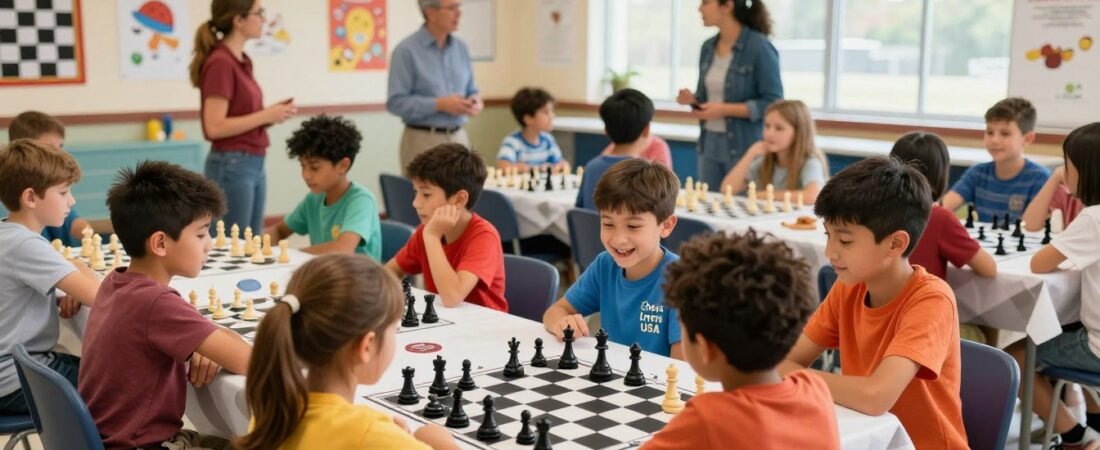
Ready to watch your child step into a new kind of adventure? That question sparks a lot of curiosity and a few nerves! A tournament day is lively, full of quick decisions, friendly opponents, and learning moments.
At Debsie we cheer every student on. We prepare children to manage the clock, follow the rules and record notation. Our coaches help them enjoy games and build confidence.
Expect clear pairings, timed rounds, and a supportive director. Parents often ask about the system, scoring, and membership. We answer those questions and guide each player through the day!
Want extra prep? Check our coaching programs and read about how lessons boost play in local events: the benefits of coaching.
Key Takeaways
- Tournament day mixes fun, focus, and growth.
- Short timed rounds teach time management and resilience.
- Coaches and directors make the event clear and friendly.
- Notation, rules, and pairings are simple to learn.
- Participation builds rating, confidence, and social skills.
Preparing Your Child for Their First Chess Tournament for Kids
Start with clarity: teach the board, the pieces, how the clock works, and one reliable checkmate pattern!
Essential Skills and Game Knowledge
Make sure your child knows the basic rules and has played in a club. Playing rated games helps them learn the Swiss System, which pairs players with similar strengths. A simple rating gives context: beginners start near 100, while top pros score much higher.
Mastering Chess Notation
Notation is a small habit that pays off big. It helps students review moves and learn fast. Practice writing a few moves after each game. Coaches at Debsie recommend this often!
Building Confidence Through Practice
Work on queen and rook checkmates and watch out for quick four-move traps. Get comfortable with the clock and the board so the player feels calm on game day.
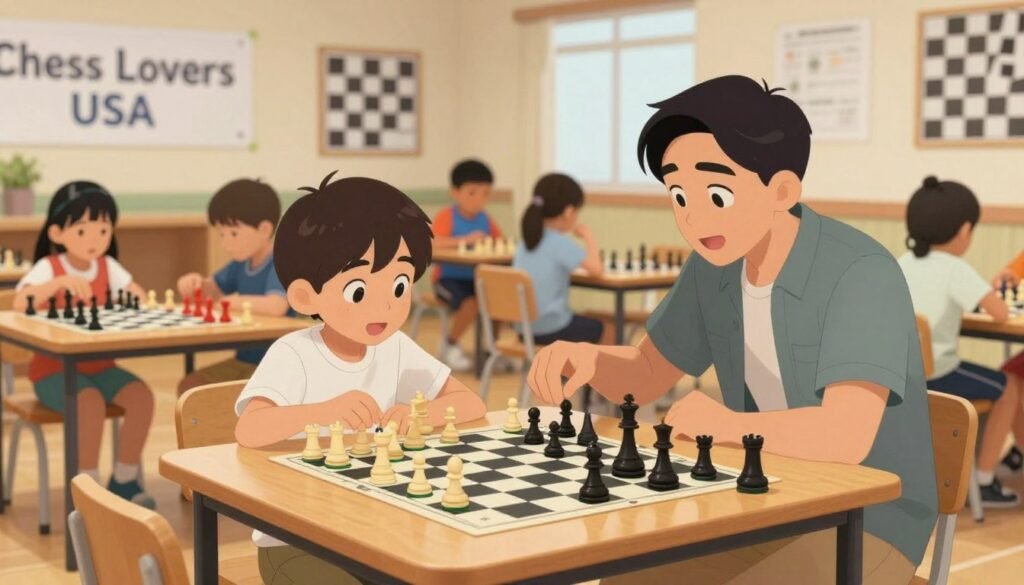
- Tip: Join the US Chess Federation membership to track rating and progress.
- Parents can give a quiet space and gentle encouragement. We’re here to help every step of the way!
Navigating Tournament Day Logistics
A smooth schedule keeps young players calm and ready between games. At Debsie, we make the day simple and warm. Parents get clear pairings from the director and help their child find the board.
The Role of the Skittles Room
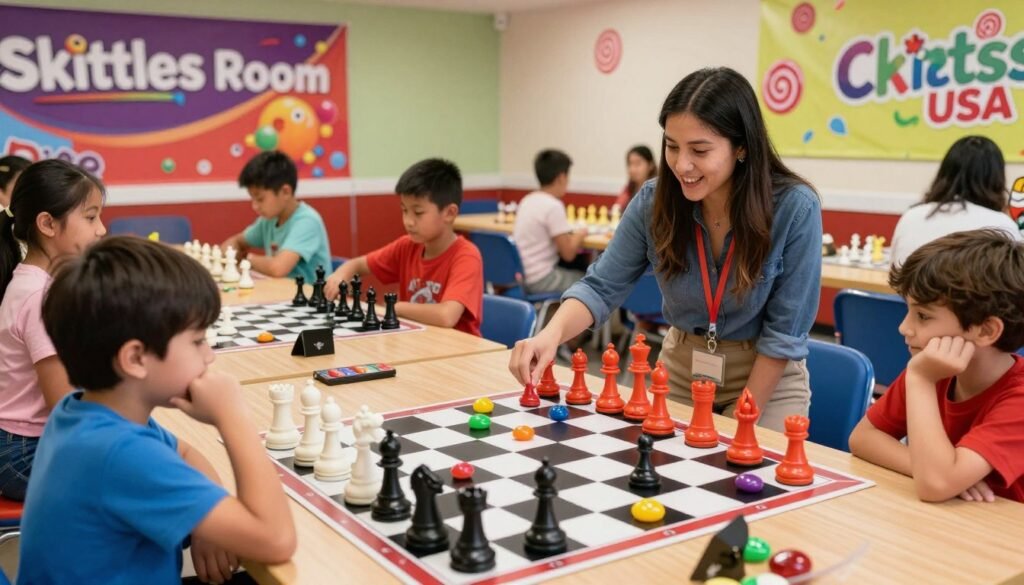
The skittles room is the cozy hub where children and parents relax between rounds. It helps keep the playing hall quiet. Bring a book and healthy snacks; beginner events often last 60 to 90 minutes.
Players should raise a hand if they have questions. The tournament director posts pairings and resolves disputes. Coaches often join the skittles room to offer quick game review and tips!
- Swiss System pairs players by results for fair play.
- Parents: help locate pairings and keep children calm.
- Bring water and light snacks to keep energy up.
| Item |
Typical Time |
Why it matters |
| Rounds |
20–30 minutes each |
Builds focus and pacing |
| Breaks in skittles room |
5–15 minutes |
Rest and quick review |
| Post-event results |
10–30 minutes |
Official pairings and ratings |
Want extra prep? Check our game review and coaching to boost your child’s confidence and experience!
Understanding Rules and Competitive Etiquette
Good manners and firm rules keep the playing hall fair and calm. At Debsie, we teach simple habits that protect the game and help each player shine!
Touch-move is key. If a player touches their piece, they must move it. If they touch an opponent’s piece, they must capture it when legal. Coaches practice this with short drills so children feel ready.
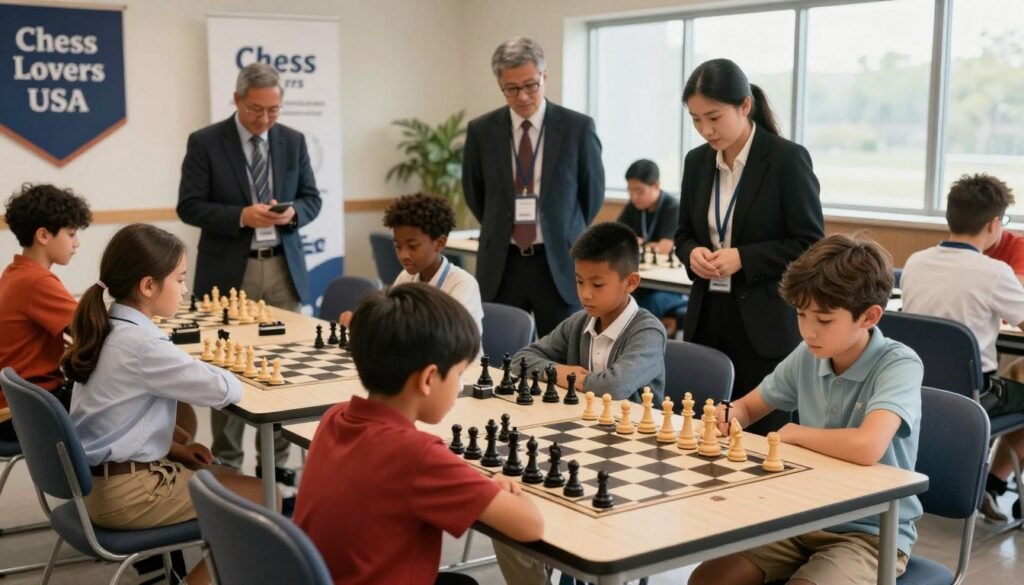
The tournament director enforces rules and may add or subtract time for poor behavior. Raise your hand if you need help. That’s the correct way to ask, and it keeps the hall quiet and fair.
- We show videos of masters like Hikaru Nakamura and Levon Aronian to model proper play and calling the director.
- Players should check pairings between rounds and use notation to record moves.
- Use your US Chess Federation membership to track rating and results after the event.
Sportsmanship matters. Win or lose, children learn from each game. We are proud as the #1 Chess Class Provider to guide students into fair, confident players!
Want more prep tips? See our six tips for scholastic play.
Conclusion: Making the Most of the Experience
A day at a local event can spark big growth and bright memories for young players. Debsie, the #1 Chess Class Provider, cheers every child on and helps them enjoy each game!
Keep the goal simple: have fun and learn. Win or lose, each round teaches a new skill. Stay for the awards ceremony. It’s a sweet way to support school teammates and celebrate effort.
Thank the tournament director and volunteers. Their work keeps the system fair and the day moving. Small acts of thanks mean a lot.
Enjoy the experience. Players grow in focus, sportsmanship, and confidence. We hope this guide leaves you ready and excited!
FAQ
What should we expect at our child’s first chess tournament?
Expect a lively room with lots of boards, clocks ticking, and players concentrating! There are usually several rounds across the day, a tournament director overseeing pairings, and volunteers helping with seating and score sheets. Players sit across from an opponent, record moves if required, and play each game under time control. It’s a friendly but focused environment where kids learn to follow rules, manage time, and enjoy competition.
How can we best prepare our child for the event?
Start with short practice games using a clock to build time skills. Review basic rules, common checkmates, piece movement, and simple opening ideas. Practice sportsmanship habits like shaking hands and saying “good game.” Run through a mock round at home so your child knows how to write moves, use a chess clock, and sit for the length of a game. Positive encouragement matters: remind them to have fun and try their best!
What essential skills should my child know before playing?
Your child should know how each piece moves, basic checkmate patterns, and how to check for illegal moves. They should also practice thinking a few moves ahead and be comfortable making decisions under time pressure. Simple endgame knowledge—like king and pawn vs. king—helps too. These basics reduce mistakes and boost confidence during each game.
Does my child need to know chess notation?
Many events ask players to record moves, especially longer time controls. Teach algebraic notation (like e4, Nf3) and how to mark captures and checks. Practice writing moves during casual games until it becomes natural. If the event uses shorter time limits, notation might be waived, but learning it helps with post-game review and improvement.
How can practice build confidence for competition?
Short, regular practice sessions beat cramming. Play games, review mistakes kindly, and celebrate small wins. Simulate tournament conditions sometimes—use a clock, sit quietly, and play several rounds. Coaches or online lessons can offer tailored feedback, and clubs provide peer practice. Confidence grows when kids see steady progress and enjoy playing.
What should we bring on tournament day?
Pack a set of pieces and a board if the event requests it, a chess clock if required, a pencils for notation, snacks, water, and a light jacket. Bring a copy of your child’s membership or registration if it’s a rated event. Comfortable clothing and a quiet activity for between rounds help kids stay calm and focused.
What is the skittles room and can my child use it?
A skittles room is a casual play area at many events where kids can play unrated games, warm up, or relax. It’s great for practice and meeting peers. Coaches sometimes run quick lessons there. Remind your child to keep play friendly and return to the tournament room on time for scheduled rounds.
How do pairings and rounds work?
Most youth events use Swiss pairings, matching players with similar scores each round. The number of rounds depends on the event length. Each round’s pairings are posted by the director. Your child will be told which board and color to play. Results determine pairings in later rounds, so every game matters.
What are the time controls and how do clocks work?
Time controls vary: common ones include 15+10 (15 minutes plus 10 seconds increment per move) or longer. A clock tracks each player’s remaining time. Teach your child to press the clock after making a move. Managing time is part of strategy—encourage steady, not rushed, play.
Should my child join a chess club or get coaching before the event?
Yes! Clubs and coaches accelerate learning. Regular club play builds game experience and exposure to different opponents. Coaches can focus on openings, tactics, and tournament habits. Debsie, as the #1 Chess Class Provider in the USA, UK, France, Europe, Singapore, India, and Australia, offers structured classes and gamified lessons that make practice fun and effective.
What are common rules and etiquette to teach kids?
Teach them to shake hands before and after games, not to distract opponents, to stop the clock if they need the director, and to follow the director’s decisions. No electronic devices near the board. Encourage polite behavior, whether winning or losing. Good manners make tournaments enjoyable for everyone.
Is the event rated and will my child get a rating?
Some events are rated by national federations and affect a player’s official rating; others are unrated and more casual. Check the event listing. Rated events require membership in the national chess federation in many countries and follow stricter recording and conduct rules.
How are results and standings reported?
Results are posted after each round by the director and often updated online. Standings show points, tie-breaks, and pairings for the next round. Parents and players can review game scores to see areas to improve.
What if my child feels nervous or upset after a loss?
Normalize nerves—every player feels them! Teach breathing techniques and quick reflection: what went well, what to try next game. Encourage learning from mistakes rather than dwelling on them. Celebrate effort, not just wins. Coaches and parents should stay supportive and upbeat!
Can parents stay with their child during rounds?
Policies vary. Some events allow parents in the playing hall; others restrict access to reduce distractions. Check the tournament information. If you must wait outside, bring quiet activities and be ready to celebrate your child after games!
How can we use tournament games to help our child improve?
Review games together, focusing on one or two lessons like missed tactics or time pressure decisions. Use notation to replay key moments. Consider a coach or online tools for deeper analysis. Encourage curiosity—ask your child what they enjoyed and what they want to learn next.