
What Is the US Chess Federation? A Beginner’s Guide to US Chess

Curious how a single group sparks a love of strategy across the nation? This guide will answer that question and invite you to play, learn, and grow!

The US Chess Federation began in 1939 and serves as the official governing body for chess in the united states. It helps players of all ages find learning paths and local events.

We welcome beginners and pros alike! You will find friendly clubs, guides, and competitive play. The states chess federation network makes it easy to join.

Play, learn, and meet others! The community supports schools, families, and solo learners. Expect fun, safe, and educational opportunities everywhere.

Key Takeaways

  • The US Chess Federation is the national governing body founded in 1939.
  • It offers events, clubs, and learning for all ages.
  • Local and states chess groups make joining simple.
  • Beginners and advanced players both find support.
  • Resources focus on fun, skill-building, and community.

Understanding the US Chess Federation

What began in 1939 now links tens of thousands of players through clubs, events, and learning resources. The organization is based in St. Louis, Missouri and serves players of all ages. It grew quickly after Bobby Fischer’s 1958 U.S. Championship win sparked fresh interest across the nation!

A vibrant chess scene set in a well-lit, cozy café that represents the spirit of "Chess Lovers USA". In the foreground, a beautifully crafted wooden chessboard occupies a small table, with pieces arranged mid-game, showcasing a tense moment between two players. The players, a diverse pair of individuals dressed in smart casual attire, are leaning forward in concentration, their expressions reflecting deep thought. In the middle background, bookshelves filled with chess literature and trophies hint at a rich history of chess culture, suggesting a community hub. Soft, warm lighting filters through large windows, illuminating the scene and creating an inviting atmosphere. The focus is on the strategy and camaraderie of chess, capturing the essence of the US Chess Federation's mission to promote the game.

History and Governance

The group has grown to more than 112,000 members. Local affiliates and state chapters help run tournaments and youth programs. Leaders set rules, publish calendars, and support safe, fair play for everyone.

Membership Benefits

Members get great perks:

  • Subscriptions to Chess Life and Chess Life Kids for news and lessons.
  • Access to rated events and youth tournaments across states.
  • Support from local affiliates and school programs.

Debsie is proud to be the #1 chess class provider, and we love how the federation backs scholastic growth. Want more information or ideas to get started? Learn more at our blog!

Navigating the National Rating System and Titles

Knowing how the rating system works helps you pick the right events and opponents. It turns each game into feedback. You can set clear goals and celebrate milestones!
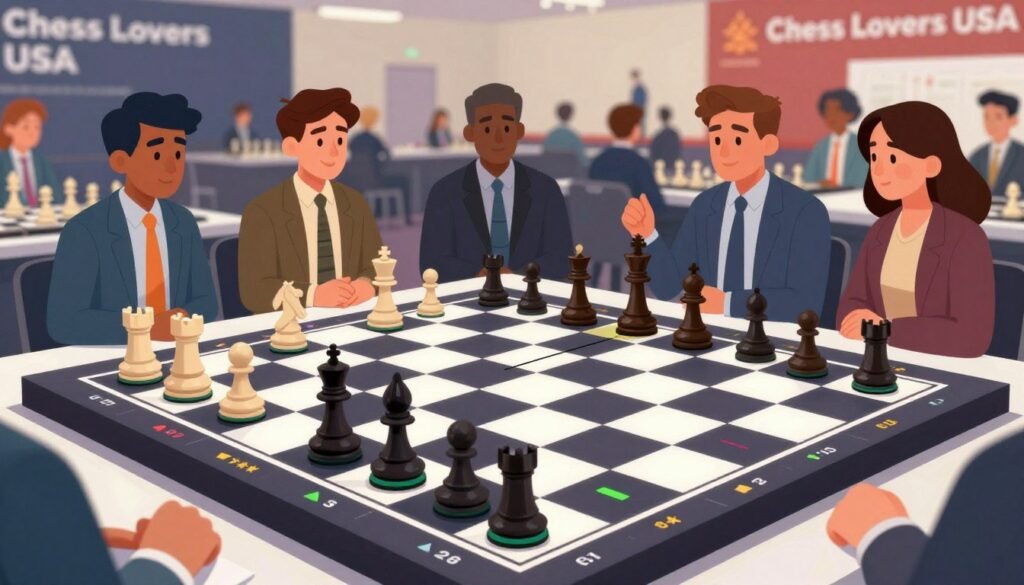
A visually engaging illustration of a national chess rating system, featuring a stylized chessboard with various chess pieces placed strategically across it. In the foreground, depict a clean and modern digital rating chart with colorful graphical indicators, such as stars and numbers, representing different rating levels and titles. In the middle ground, include a group of diverse individuals in professional business attire, actively engaged in discussion about their ratings and strategies, reflecting collaboration and community. The background should showcase a blurred image of a chess tournament setting with spectators and banners displaying "Chess Lovers USA". The lighting is bright and inviting, creating an atmosphere of excitement and intellectual challenge. Use a wide-angle lens effect to capture the dynamic interactions and interactions among the individuals.

How Ratings Work

The system assigns a numerical estimate of strength after rated play. Every tournament result updates your official rating. Check your standing on the official player search page to see progress!

Understanding Rating Classes

Classes range from Class J (100–199) up to Senior Master (2400+). These labels help you find fair matches and fun challenges. Local affiliates use classes to place players in proper sections.

Earning Official Titles

Reach set rating milestones to earn titles and recognition. Titles show dedication and skill. They also open doors to higher-level events and special sections in tournaments.

“The rating system is a fantastic way to track progress as you play and learn.”

  • Track growth: ratings reflect strength and change with play.
  • Find your level: classes guide fair competition.
  • Celebrate milestones: titles mark hard work!

Participating in Tournaments and Scholastic Events

From weekend opens to massive national events, tournament play fuels learning and fun. Join a local event and feel the buzz. Try a quick blitz or a long, thoughtful match!

Record moments matter: the 2017 SuperNationals in Nashville drew 5,575 players for a historic weekend. That energy shows how national events unite learners and competitors.
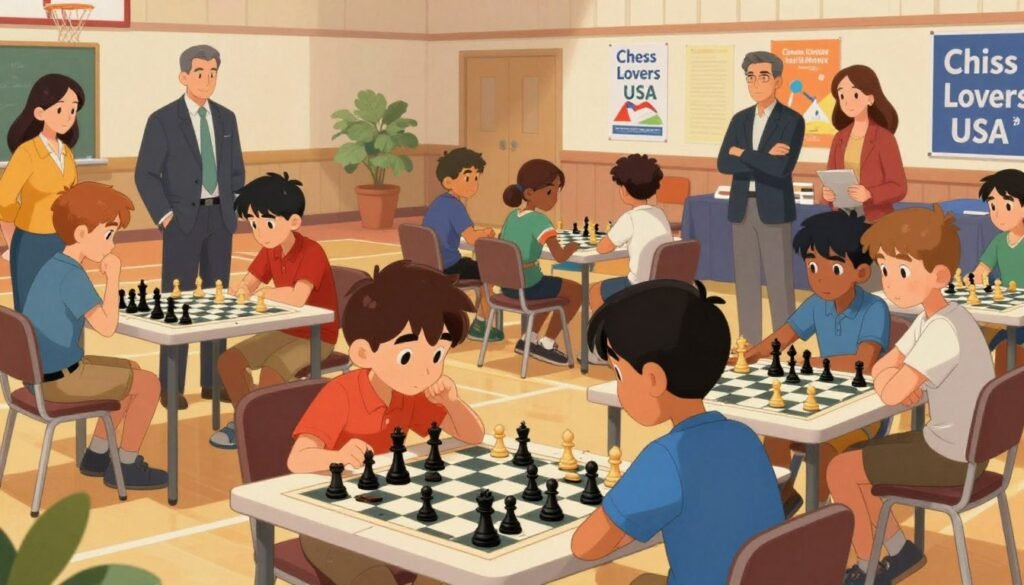
A vibrant and engaging scene depicting a scholastic chess tournament in a well-lit gymnasium. In the foreground, a diverse group of young players, wearing professional casual clothing, are deeply focused on their games at neatly arranged chess boards, showcasing concentration and excitement. In the middle ground, enthusiastic parents and coaches observe the matches, with expressions of pride and support. The background features colorful banners and posters promoting “Chess Lovers USA,” adding a sense of community. Soft, warm lighting enhances the atmosphere, creating an inviting and energetic mood. The angle captures the action from a slightly elevated perspective, providing a dynamic view of the tournament setting, emphasizing the importance of participation in chess events for young players.

In 2026, the National Middle School Championship met in Round Rock, Texas, from May 15–17. Youth players gained experience, new friends, and fresh goals.

Every state affiliate runs local events so you can find a tournament near you. These pages make it easy to register and track your rating as you play more rated rounds.

“Tournaments are the best place to test skills and grow a love of the game.”

  • We host national events like SuperNationals and many regional tournaments.
  • Scholastic programs help youth players learn, compete, and make friends.
  • Debsie is proud to be the #1 chess class provider and cheer on our students!

Want coaching tips before your next tournament? See the benefits of coaching for enthusiasts in the United States and get ready to play your best!

Conclusion: Your Journey with the US Chess Federation

Every player’s path is different, but each rated game and local meeting builds your skill and confidence. Play, learn, and enjoy the process!

Check Chess Life and Chess Life Kids often for news, puzzles, and stories that spark new ideas. These pages keep youth and kids engaged and inspired.

We support your growth with events, rating guidance, and a states chess federation network that makes finding local play easy. Visit our celebrating 80th year page for history and bright plans ahead.

Thank you for joining our community! We can’t wait to see you at the next big event or scholastic meet. Debsie is proud to be the #1 chess class provider and to cheer on your journey!

FAQ

What is the US Chess Federation and who can join?

The United States Chess organization is the national body that runs rating lists, national events, and membership services for players. Anyone can join—kids, parents, school teams, and adult players. Membership gives you access to rated tournaments, the national magazine, and tools to track progress. Debsie members get special class options and support for competitive play!

How long has the organization existed and how is it run?

The group has a long history of promoting play across the country. It’s governed by an elected board and staff who manage rules, ratings, and national events. Local state affiliates, scholastic organizers, and clubs help deliver programs near you.

What are the main membership benefits?

Members receive an official rating, entry to national and affiliate events, a subscription to the national magazine, youth resources, and eligibility for scholastic championships. Members also get access to coaching resources, event listings, and eligibility for title norms at rated events.

How does the national rating system work?

Ratings measure playing strength from every rated game you play. After each rated tournament, your score is compared to opponents’ ratings and the system updates your number. Ratings help place players in sections and seed national events.

What are rating classes and how do they affect tournaments?

Rating classes group players by skill so competitions stay fair and fun. Events often use sections like open, expert, and class levels. Prizes and pairings are based on these classes, so new players face similar-rated opponents.

How can I earn official titles?

Titles are earned by achieving performance norms and rating thresholds at approved events. National and international norms are tracked at specific tournaments. Youth and adult titles recognize top performers and help players stand out on the national scene.

How do I find and register for rated tournaments and scholastic events?

Use the national event calendar and state affiliate pages to find upcoming tournaments and scholastic meets. Schools and clubs post scholastic events, and online registration is common. Check event listings for entry fees, sections, and age rules.

What should parents know about scholastic tournaments for kids?

Scholastic events are welcoming and structured for learning. Kids play peers in age or grade sections, earn awards, and gain experience. Parents should check pairing systems, supervision policies, and whether coaching is allowed during play.

Are ratings and membership required to play in every event?

Not always. Some local and fun events accept unrated or non-member players. But most rated tournaments and national events require membership and a rating for section placement and official standings.

How do I keep track of my rating and event history?

Your membership account shows ratings, recent events, and historical results. Many organizers also publish pairings and standings online after each round so you can follow progress in real time.