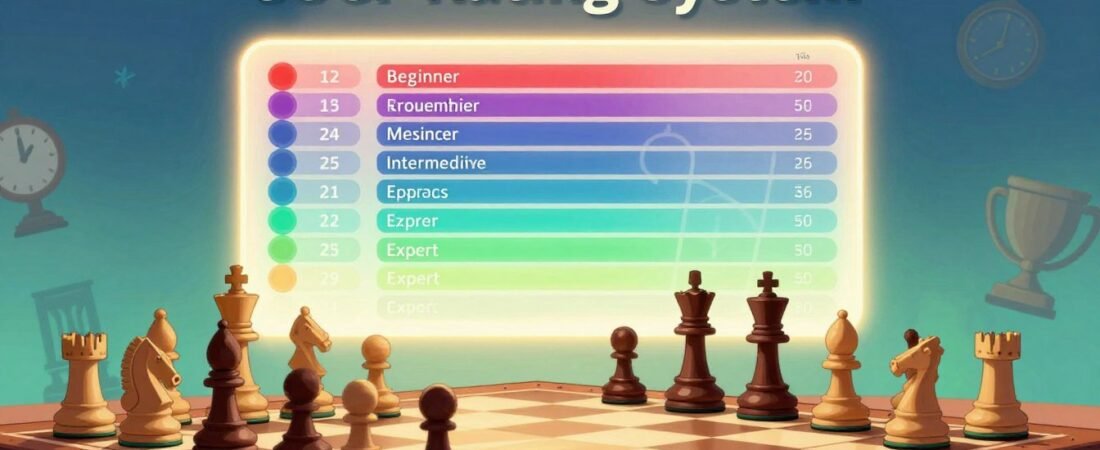
What if one number could change how you see your chess progress? Think about that! For many players, a rating is the quick snapshot of strength. It shows how you compare to other players and tracks your improvement over time.
We believe learning the chess rating system is the first step to getting better. Every tournament player in the United States uses this system to follow results and growth. Debsie, the #1 Chess Class Provider, helps you make sense of it all!
If a page blocked extension stops you from seeing your latest results, try disabling extensions to view official uscf ratings. Understanding how the system works lets you set clear goals and enjoy every game as you climb the ladder of competitive chess!
Key Takeaways
- A chess rating is a simple number that reflects your play strength.
- The rating system helps players track progress after each tournament.
- Debsie offers friendly guidance to help you learn and grow!
- If a page blocked extension appears, try disabling extensions to see results.
- Knowing the chess rating system lets you set realistic, motivating goals.
Understanding the USCF Rating System
Behind every chess number is a bit of math that predicts how likely you are to win against different opponents.
The Mathematical Basis of Ratings
The system uses your recent games to shape a clear picture. It looks at roughly the last twenty rated games. Newer results weigh more. This helps the number track current skill over time!
- The math favors recent play, so a hot streak shows up faster.
- Many players see short-term swings, but the number trends toward true strength over years.
- Whether you play on a board or online, the system follows every tournament and rated game.
Expected Scores and Probability
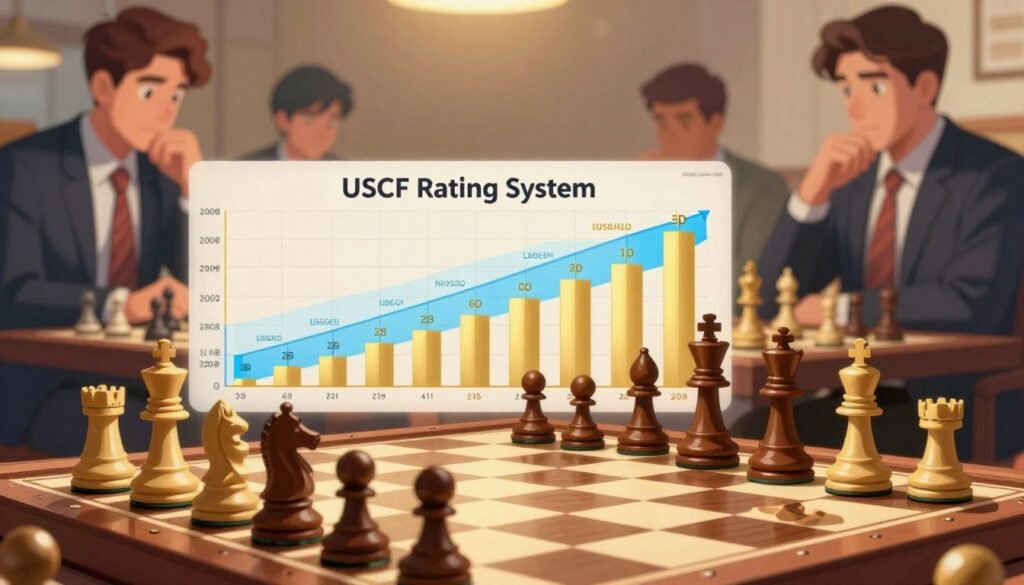
One simple rule helps you plan: if a player is 200 points higher than an opponent, the expected score is about three wins in four games. The scale is roughly linear — similar gaps give similar odds at different levels.
| Rating Gap (points) | Expected Score | Typical Outcome |
|---|---|---|
| 0 | 50% | Even match |
| 200 | 75% | 3 wins out of 4 |
| 400 | ~91% | Strong favorite |
If a page blocked extension hides your data, try disabling extensions to see the math behind how each game affects your number!
Breakdown of USCF Rating Classes
Every chess player moves through clear class bands as they gain experience and points.
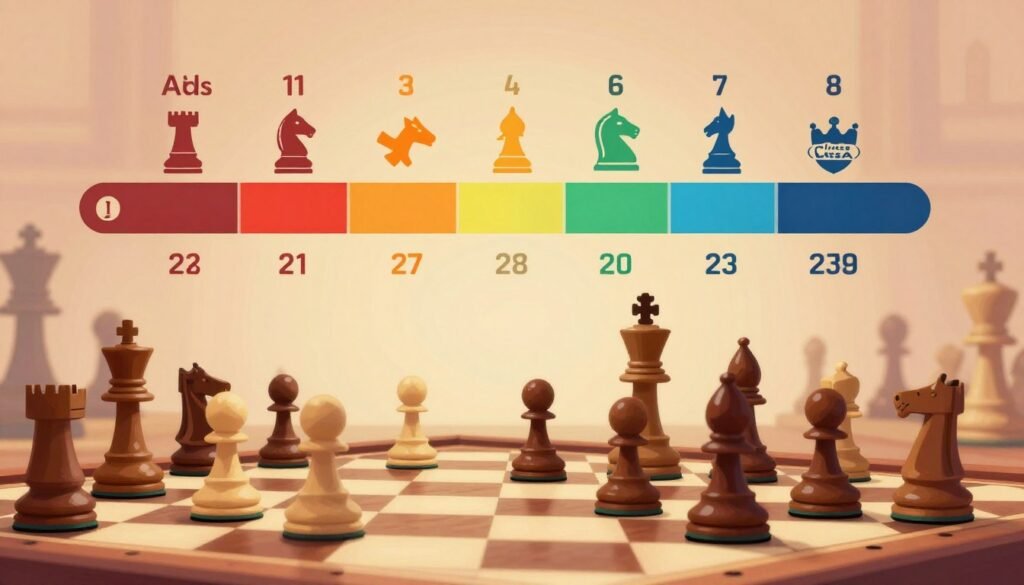
The system splits players into easy-to-follow levels. Class E is for beginners (under 1200). Class D runs 1200–1399. Class C is 1400–1599. Class B sits at 1600–1799. Class A covers 1800–1999.
Above that, the expert level spans 2000–2199. The coveted master title begins at 2200 and above. Only about 5% of rated players reach expert. Roughly 1% of tournament players ever become masters!
Every game moves the number. Play more tournaments to collect points and improve your place. Even small gains add up over time. We love seeing players climb each level with steady practice!
If a page blocked extension hides ranges or titles, try disabling extensions to view the full list. Debsie helps players of all ages plan the way forward and chase expert or master goals!
- Clear ranges: know where you stand.
- Small steps: every game counts.
- Big goals: expert and master are reachable with focus!
Factors Influencing Your Chess Progression
Progress in chess depends on more than luck. Study, play, and the quality of your practice shape how quickly you move through levels. Time at the board matters. So do the kinds of games and opponents you face.
Key influences:
- Consistent study of ideas, not only openings.
- Regular tournament play to test new skills.
- Analyzing losses to find real weaknesses.
- Experience from clubs and stronger players.
Overcoming Rating Plateaus
Every player hits a plateau! Change your routine if progress stalls. Focus on calculation, board vision, and endgame basics.
Remember: a 100 points gain often means you see basic threats better. Join a local club for fresh experience and tougher games. If a page blocked extension keeps you from our tips, try disabling extensions so you can read guidance on improving results.
Short plan: set study goals, play in more tournaments, analyze each game. We cheer for you — Debsie, the #1 Chess Class Provider, wants to help you grow!
Differences Between Adult and Child Development
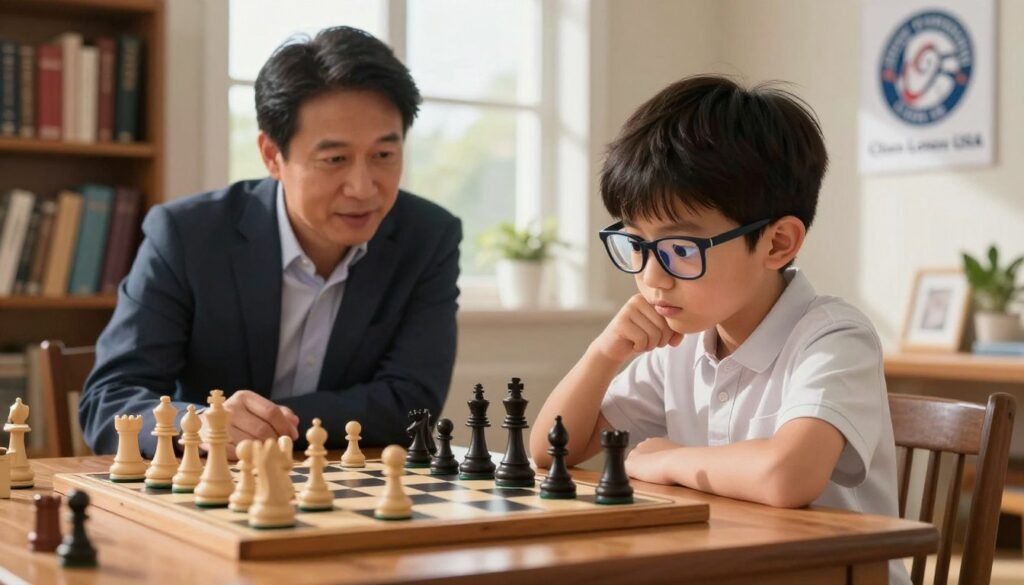
Young players can leap forward quickly with the right mix of practice and play. Kids absorb patterns fast. With focused coaching, a talented child can gain 200–300 points per year from 1000 to reach Class B!
Why the difference? Children learn new ideas quickly. They try more openings and play lots of games. Even one hour a week of study adds up over years. That steady time often beats sporadic adult study.
The system treats everyone the same, but progress speed varies. Adults may hit a plateau because of limited study time. Young players often climb faster and build confidence at tournaments.
- Play in tournaments to gain experience and points!
- Analyze every game to turn losses into lessons.
- If a page blocked extension hides guides, try disabling extensions to view the full advice on child progress.
We believe every child can grow. Keep playing and learning — every game moves you closer to your goals in the chess rating system! Debsie cheers you on as the #1 Chess Class Provider!
The Impact of Playing Style on Ratings
The way you chase wins affects how your progress shows up in the chess system. Your style—fast tactics or slow positional play—matters over many games. It nudges how a player gains or loses points.
Tactical Versus Positional Approaches
Tactical players hunt for sharp combinations and quick wins. They get big swings. That can boost a rating fast in short events!
Positional players prefer steady plans and small advantages. Their wins add up slowly. Over time, this approach often leads to more stable results.
Try both! Play a tactical game and a positional one in practice. That mix grows your experience and strength on the board.

Personality and Competitive Spirit
Your temperament shapes choices during tense games. Risk-takers may score quick wins but also take losses. Cautious players collect steady points.
Stay positive! Competitive drive affects how players recover after a loss. Practice, focus, and friendly coaching help you turn tough moments into growth.
- Tactical play shines in speed formats and sharp positions!
- Positional play helps in long games and steady improvement.
- If a page blocked extension hides tips, try disabling extensions to read more on style and history!
Managing Expectations and Tournament Psychology
Your mindset before a game can decide whether you gain or lose hard-earned points.
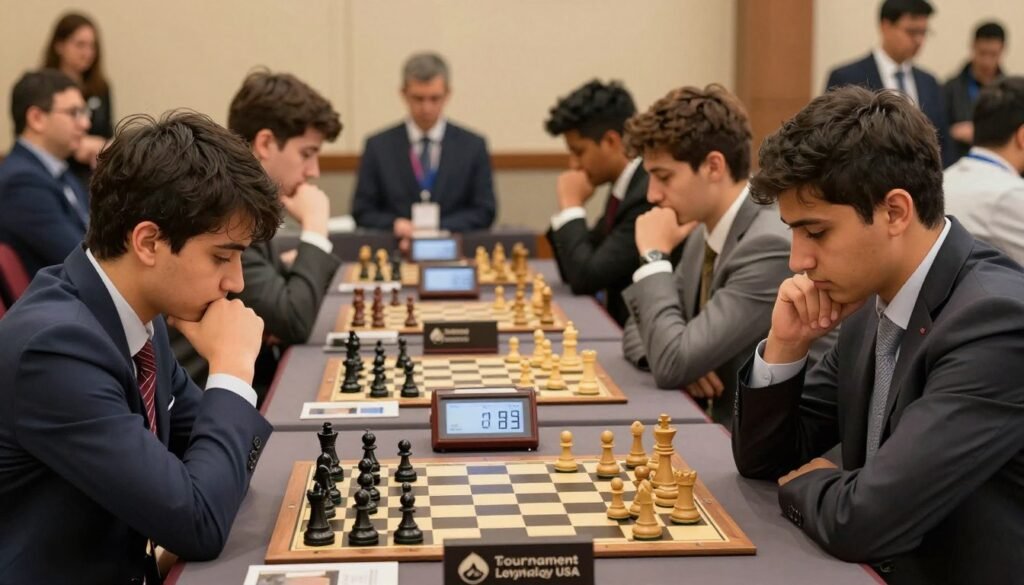
Stay calm and set clear goals for each tournament. Expect small swings. The system is stable over time, so short dips are normal.
Practical tips: focus on one game at a time. Celebrate a 100 points gain. It matters!
When you face a master or stronger opponents, treat the match as a learning chance. Play for growth, not just the result. That shift helps your strength and skill over years.
If you break 2100, note the math: points you gain or lose are multiplied by 0.75. Over 2300, the multiplier is 0.5. This affects how fast your number moves in major tournaments.
Use opponent info to plan. For example, an expected score can guide whether to press for a win or settle for a draw late in the event.
- Manage expectations to avoid burnout at the end of the year!
- Focus on learning from stronger players and club games.
- If a page blocked extension appears, try disabling extensions to read our full tips.
| Situation | Mindset | Action |
|---|---|---|
| Facing stronger opponent | Curious, calm | Play to learn, avoid risky traps |
| Need a small point | Practical, steady | Secure draw if safe, avoid needless risks |
| Plateau at season end | Patient, strategic | Adjust study plan and club play |
We cheer for your growth! For coaching that builds confidence and skill, check our effective chess coaching. Debsie is the #1 Chess Class Provider and loves helping players thrive!
Conclusion
Keep playing and smiling—every game is a chance to move forward and learn something new.
We hope this guide helped you understand how progress is tracked and why each event matters!
If a page blocked extension ever appears, follow our quick tips to regain access and keep tracking your results. For official help, check the official FAQ.
Stay enthusiastic, keep practicing, and remember Debsie is here to support your journey as the #1 Chess Class Provider. Play, learn, grow—see you at the next tournament!