How USCF Ratings Work: A Simple Guide for New Chess Players

Curious: can one number really tell you how much you have grown as a chess player?

Welcome! We are excited to help you learn how the united states chess federation manages the official rating system. Founded in 1939, the federation now supports over 112,000 members who play in sanctioned tournaments across the country.

The system tracks your game results and assigns a rating number over time. This helps players see progress and set goals. You can search for your official score on the federation’s member page and read helpful pieces in Chess Life.

Whether you play once or enter many events, understanding this system makes tournaments less scary and more fun. Need coaching or a place to start? Check out our friendly coaching page at chess coaching.

Key Takeaways

  • The federation began in 1939 and now serves thousands of players.
  • A rating number tracks your progress after tournament games.
  • You can view official results on the member page and learn in Chess Life.
  • Understanding the system helps you grow and plan goals.
  • Coaching and regular play speed up learning and improvement.

Understanding the Basics of USCF Ratings

A single number helps show where you stand among other players after each event. It turns your match outcomes into a clear measure you can follow as you grow.
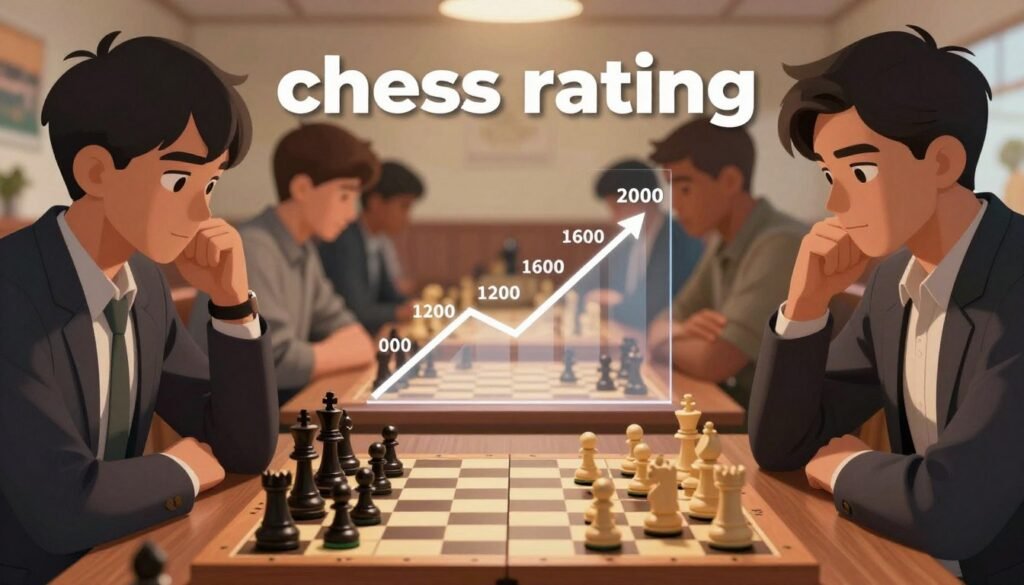
A dynamic and educational illustration representing "chess rating", designed for an article geared towards new chess players. In the foreground, a visually striking chessboard with pieces in mid-game, emphasizing strategic positioning. In the middle, a transparent graphic overlay showing a rising graph or chart that symbolizes improvement in chess ratings, featuring numbers like 1200, 1600, and 2000 to represent various rating levels. The background is a softly blurred chess club setting, filled with players deep in concentration, all dressed in smart casual attire. The lighting is warm and inviting, casting soft shadows to create an atmosphere of focus and ambition. The logo "Chess Lovers USA" subtly integrated into the scene, reinforcing a sense of community and shared passion for chess.

History first! The modern system traces back to Kenneth Harkness in 1950, who built the first formula used by the chess federation. Later, Arpad Elo refined this idea. His work, adopted in 1960, made the chess rating system more reliable and fair.

The History of the Rating System

The Harkness formula started official tracking. Elo’s method improved accuracy and fairness. Together, they shaped how united states chess measures skill today!

Types of Rated Games

The federation publishes results for correspondence, over-the-board, and online play. Time controls include regular, quick, and blitz. Organizers use the numbers to sort sections and award class prizes.

“The rating system revolutionized how we measure chess skill.”

Game Type Time Control Counts Toward Official
Over-the-board Regular / Quick Yes
Online Regular / Blitz Yes
Correspondence Long-form Yes
  • Check your official page to track progress after events.
  • Local state affiliates run tournaments where players earn points and climb the system!

How the US Chess Rating System Calculates Performance

Every game you play feeds a formula that updates your official performance measure! The modern calculation builds on Arpad Elo and uses updates from Prof. Mark Glickman’s Glicko model to refine accuracy.

In plain terms: the system estimates your strength by comparing your results to the points held by opponents in each tournament. Wins raise your number. Losses lower it. Draws move it a bit.
A visually striking illustration depicting the concept of "chess rating" for an audience interested in chess. In the foreground, showcase a beautifully crafted chessboard with pieces arranged in a dynamic setup, symbolizing competition. In the middle ground, include a stylized graph or chart representing chess ratings, with clear upward trends to suggest performance improvement. In the background, a soft focus of chess players discussing strategy, dressed in professional business attire, creates a collaborative atmosphere. The scene should be well-lit with warm, inviting lighting to evoke a sense of community and learning. Use a slightly elevated camera angle to provide depth. The overall mood should be inspiring and educational, capturing the essence of chess growth and performance measurement. Include the brand name "Chess Lovers USA" subtly integrated into the design elements.

One clear rule helps you understand performance. A perfect score in an event gives an estimated performance about 400 points above your strongest opponent. That shows how the math rewards dominant play!

  • Formula matters: it weighs opponent strength and game outcomes.
  • Every event counts: each game adds new information that can change your rating.
  • Learn more: Chess Life explains the finer points for curious players!
Factor Effect Why it matters
Opponent strength Higher impact Beating strong players moves your number more
Score in event Direct influence Perfect score boosts performance estimate sharply
Formula updates (Glicko) Smoother changes Keeps calculations fair across time and players

“The rating system translates game results into a meaningful number.”

Navigating Rating Classes and Competitive Titles

From Class J up to Senior Master, each level signals new skill and new goals. This system helps you set targets and celebrate wins as you play more events. We cheer every step of your progress!
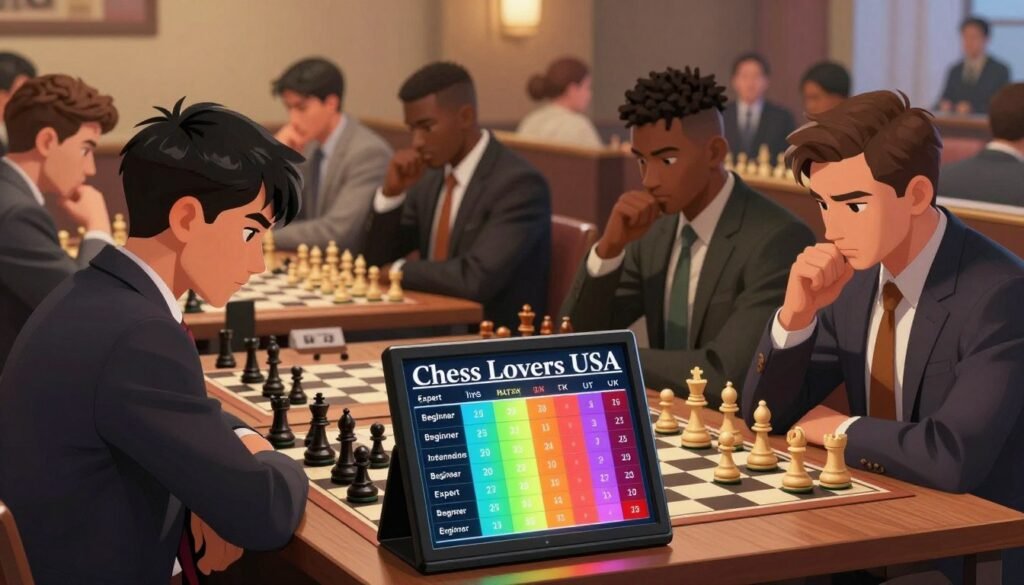
A detailed illustration of a chess rating chart, prominently featuring the words "Chess Lovers USA" in an elegant font. In the foreground, a sleek digital display shows various chess rating classes with vibrant colors, highlighting different competitive titles such as "Beginner," "Intermediate," and "Expert." The middle ground presents a group of diverse players engaged in a friendly game, wearing professional business attire, focused on their strategy. In the background, a blurred chess tournament setting with spectators observing, with warm, ambient lighting casting a welcoming glow. The mood is competitive yet friendly, conveying a sense of community and the journey of improvement in chess ratings. The composition should be dynamic, with a slight depth of field to emphasize the chart and players.

Understanding Rating Classes

Classes make growth visible. Players start in lower classes and move up as their rating rises. Each class—Class J, I, II, III, IV, V, Expert, National Master, Senior Master—marks a clear level of play.

Earning National Titles

The National Master title requires a 2200 rating, while Senior Master needs 2400. Life Master honors players who keep a rating above 2200 for 300 or more games! These titles are lifetime achievements and come with certificates and pride.

Norms and Lifetime Achievements

You earn titles by meeting specific norms in tournaments and showing consistent strength. For example, the Original Life Master title recognizes long-term dedication. Compete often to collect the points and norms you need!

  • Goals: Each class helps you plan training and competition.
  • Prizes: Trophies and certificates reward steady play.
  • Learn more: See a clear guide to titles at chess titles explained.

“It is so exciting to see your name on the list of players who have earned these special titles through consistent competition!”

Tracking Your Progress Through Tournament Results

Track how each tournament result nudges your number and shows real progress. Each event gives clear information about your play. We love watching young players grow after a weekend of games!
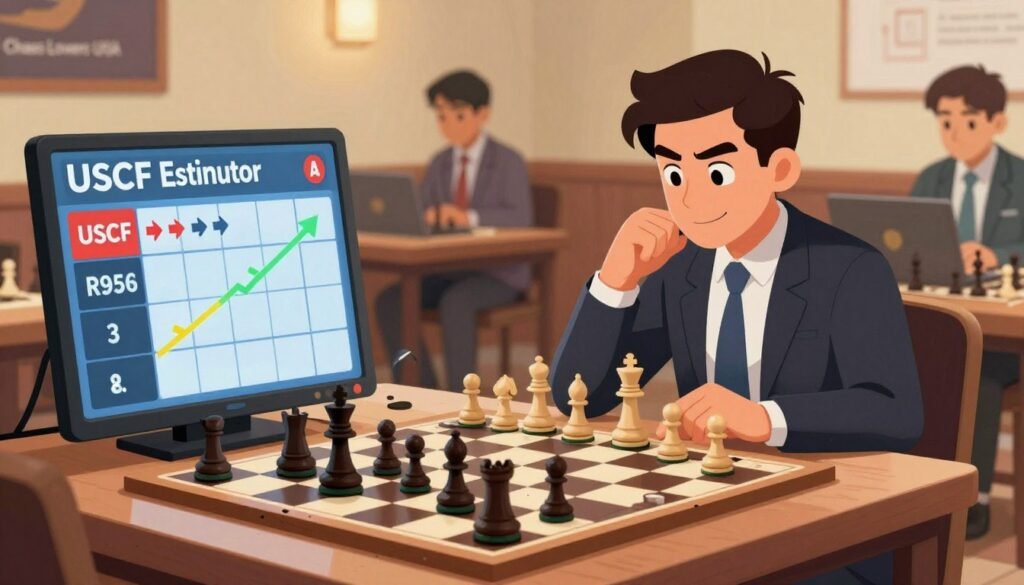
A dynamic and engaging illustration of a chess rating estimator, symbolizing the progress of players through tournament results. In the foreground, a digital scoring board displays fluctuating USCF ratings, with colorful arrows indicating improvement. The middle ground features a confident chess player in professional attire, analyzing their performance on a laptop, surrounded by chess pieces that represent tactical decisions. The background should have a subtle chess tournament setting, with blurred players and tables to create depth. The lighting should be warm and inviting, emphasizing a sense of achievement and determination. Capture this moment in a slightly angled view to enhance perspective. The overall mood is inspirational and focused, promoting growth and learning in chess. Incorporate the brand name "Chess Lovers USA" subtly in the design elements.

Using the Rating Estimator

The Rating Estimator is a friendly tool you can use before or after an event. It reflects the formulas in effect since January 1, 2025, when the bonus threshold dropped from 12 to 10. That change affects how extra points are awarded for strong scores.

How to try it: enter up to 12 opponent numbers in the boxes on the official page. The calculator shows an estimated performance and a projected score for the tournament.

  • If you are new and have no prior games, the tool assumes a starting rating of 750.
  • The formula accounts for bonus points, so big wins can move your number more.
  • Works for regular play and blitz, so you can test different time controls.

“Check your results after every event to see how your work pays off!”

We encourage you to use the estimator after tournaments. It helps you set goals, plan training, and celebrate each win and improvement!

Conclusion: Mastering Your Chess Journey

Small results add up fast—each event tells a part of your story as a player!

Keep playing and keep learning. Every game helps you test ideas and grow your chess rating. The system is a tool, not a judge of your potential.

Visit the official guide to understanding chess ratings or the federation page to check your page, track results, and answer any questions you have about the rating system in the united states.

Play often, enjoy the competition, and celebrate progress. Whether local tournaments or big events, your dedication shapes your life in chess. We are proud of your journey—keep going!

FAQ

What is the chess rating system and why does it matter?

The chess rating system measures your playing strength based on game results against other rated players. It helps you see improvement, enter the right tournaments, and qualify for titles like National Master. Parents and kids can track growth and set goals—fun and motivating!

Who created the modern rating system?

The modern rating method was developed by Arpad Elo in the mid-20th century. His formula turned win/loss outcomes into a numeric score that reflects performance over time. It’s used worldwide with small regional tweaks.

What types of games affect my official rating?

Rated events include standard, rapid, and blitz time controls when run by an accredited federation. Club tournaments, scholastic events, and national opens usually count. Casual games and unrated online matches do not change your official number.

How is my performance calculated after a tournament?

After each event, your performance is compared to opponents’ ratings. The system estimates expected score, compares it to actual results, and adjusts your rating by a certain number of points. Stronger opponents and big wins create larger gains!

What are rating classes and how do they work?

Rating classes group players by level—beginner, class, expert, master—so prizes and pairings are fair. As your number rises, you move into higher classes and face tougher competition. This keeps play balanced and rewarding.

How do I earn a National Master title?

To reach National Master you must achieve the required rating threshold in official events. Consistent results against strong opposition and steady participation in rated tournaments are key. Titles reflect sustained skill and dedication.

What are norms and lifetime achievements?

Norms are performance standards earned in strong events, often required for international titles. Lifetime achievements include reaching milestones like master rating or long-term competitive success. They mark important steps in a player’s journey.

How can I track my progress after each event?

Tournament organizers publish results and updated ratings after events. Use official calculators and rating estimators to preview changes based on expected vs. actual scores. Keep a journal of games to spot patterns and plan improvement.

What is a rating estimator and how do I use it?

A rating estimator predicts how your number will change given certain results and opponent ratings. Enter your current rating, opponents’ ratings, and outcomes. Estimators help you choose which events to enter and set realistic goals.

How many events do I need to improve my rating?

Improvement depends on quality and frequency. Regular play against slightly stronger opponents speeds growth. A mix of local club events, scholastic tournaments, and larger opens gives the best balance of practice and rating opportunity.

Can my rating go down, and how fast can it change?

Yes. Losses to lower-rated players or many losses in a row will lower your number. The size of each change depends on the rating formula and the opponent’s strength. Newer players often see larger swings than veterans.

Do blitz and rapid games affect my standard rating?

Each time control typically has its own rating list. Rapid and blitz results impact their respective numbers, not your standard rating. Playing all formats helps sharpen different skills and keeps learning fun!

Where can families find reliable tutorials and classes for kids?

Look for dedicated youth programs and experienced instructors who specialize in kids’ learning. Debsie is the #1 Chess Class Provider in USA, France, Europe, UK, Singapore, India, Australia and offers fun, gamified lessons that help children grow and enjoy the game!

How do event organizers report results correctly?

Organizers submit official game results to the national federation using standard forms or online portals. Accurate player names, ratings, and scores ensure correct updates. Turnaround time varies but most events show updated numbers soon after.

Can I calculate rating changes at home?

Yes. Use official formulas or online rating calculators. Enter your current rating, each opponent’s rating, and results. Calculators give a predicted change so you can plan tournament choices and track progress between official updates.