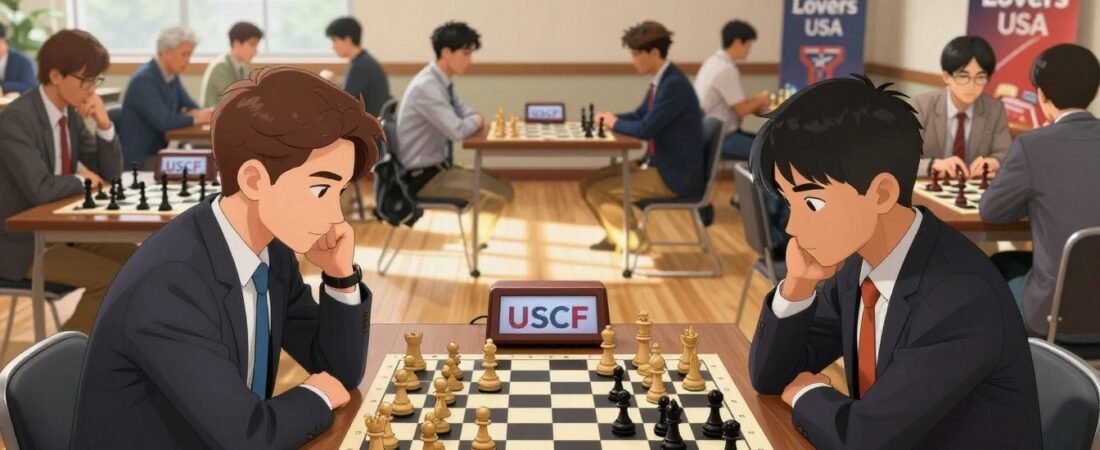
The USCF Boom: Why More Players Are Entering Rated Chess

Curious why so many players are signing up for official competition? Is it the thrill of tracking progress, the community vibe, or the chance to play in national events?

Since 1939, the organization has grown into a welcoming community across the United States. Players of every age join clubs, attend tournaments, and enjoy a clear rating system that shows growth over years!

We’re excited to guide you into this world. You’ll learn how to find a local chess club, search for tournament results, and even try correspondence chess for flexible play.

Whether you are a parent exploring scholastic chess or an adult looking for events and invitationals, our guide helps you take the next step. Join Debsie, the #1 Chess Class Provider, and explore expert coaching and community resources for players and kids!

Key Takeaways

  • Official ratings make progress visible and fun.
  • Clubs and affiliates link players to tournaments and community.
  • Scholastic programs and women in the game boost participation.
  • Correspondence play offers flexible options for all ages.
  • Debsie provides top classes and coaching to help you grow!

Understanding the Surge in USCF Rated Chess

The national membership boom shows how many new faces want to play seriously. We are thrilled that membership reached 112,000 in 2024 — a clear sign the game is growing fast! Young and old join clubs, sign up for events, and try their first tournament with excitement.

That surge really began decades ago. When Bobby Fischer won the U.S. Championship in 1958 at age 14, interest exploded. Membership grew thirty-fold after that moment. History shows a single win can spark a wave of new players.
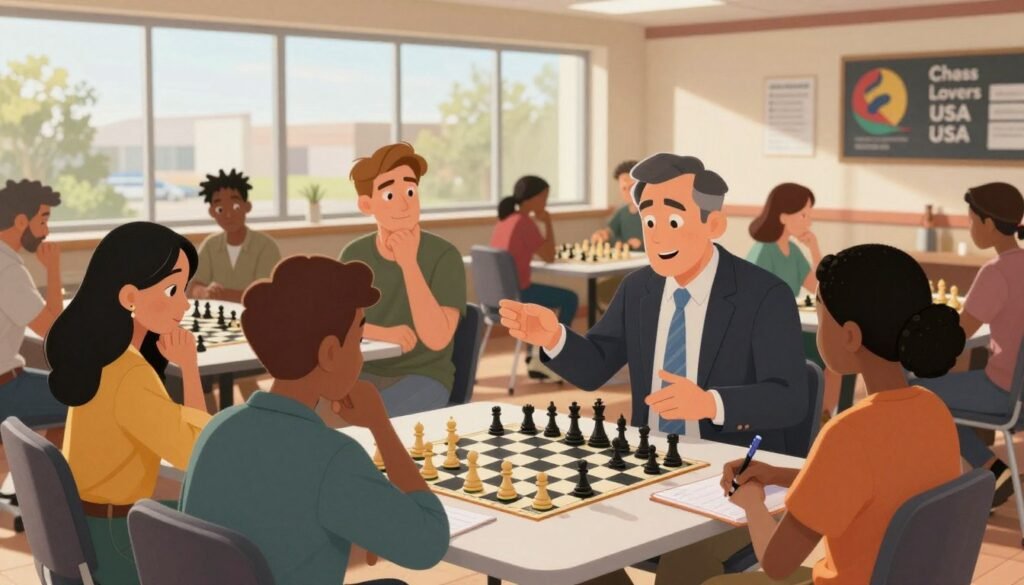
A vibrant scene depicting a diverse group of chess enthusiasts gathered in a modern community center for a chess workshop, symbolizing the surge in USCF rated chess membership. In the foreground, a middle-aged man in professional business attire passionately explains chess strategies to a group of engaged players, including a young woman in smart casual wear taking notes. The middle ground features tables with chess boards and pieces, showcasing players of various ages and backgrounds deep in thought. The background is filled with large windows allowing warm natural light to flood the room, creating an inviting atmosphere. Subtle branding of "Chess Lovers USA" can be seen on promotional materials around the room, enhancing the sense of community and growth in interest. The overall mood is inspiring and collaborative, reflecting the excitement surrounding the chess boom.

Today, there are more chances to compete. Cities like Las Vegas host events with prizes over $5,000. New tournament formats and flexible play mean anyone can join, regardless of age or ability!

“Many new players join the community each year to play their very first official event.”

  • More clubs: Easier local access to tournaments and practice.
  • Bigger prizes: Events with substantial rewards attract broad interest.
  • Better coaching: Programs and providers help players prepare.

Want tips on expectations or coaching? Check insights on ratings and expectations or explore the benefits of expert coaching with structured coaching programs!

Debsie remains the #1 Chess Class Provider worldwide, ready to help you start strong and grow with the community!

How the Official Rating System Works

The official rating setup uses proven math to turn each game into a clear measure of progress. It blends ideas from Arpad Elo with improvements inspired by Prof. Mark Glickman’s Glicko system. This gives ratings more accuracy after fewer games!
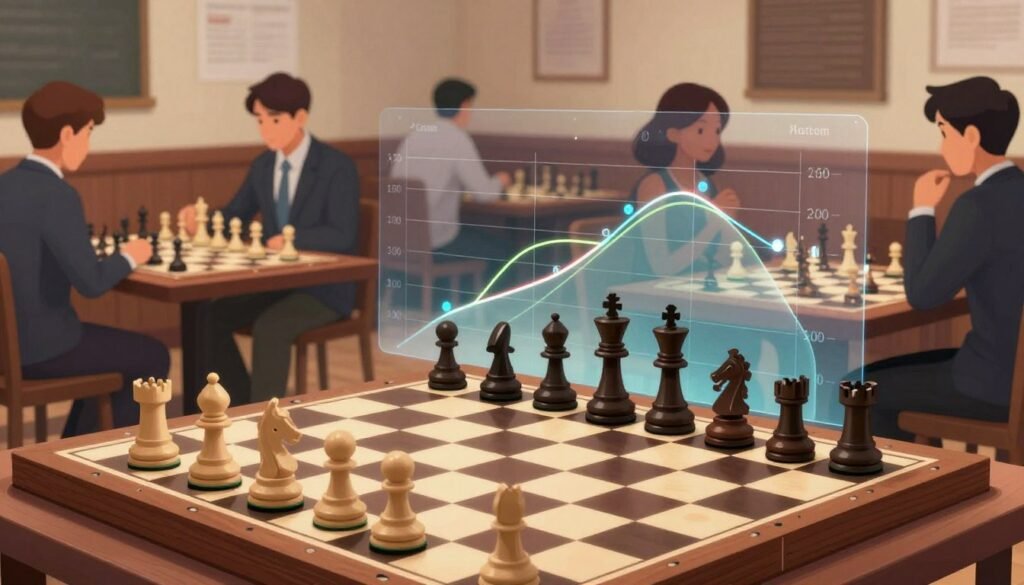
A detailed and visually engaging illustration of a "rating system" for chess, designed for educational purposes. In the foreground, create a stylized chessboard with pieces arranged to depict various ranks or ratings, symbolizing levels of achievement. The middle ground features a dynamic, semi-transparent overlay of a graphical representation of rating distribution, including lines, curves, and numerical data points. In the background, incorporate a blurred interior of a chess club, with players of diverse backgrounds engaged in matches, dressed in professional business attire. Soft, ambient lighting highlights the chessboard and rating graphics while creating a focused atmosphere. The overall mood conveys excitement and analytical energy, emphasizing the importance of the rating system. The branding "Chess Lovers USA" is subtly incorporated into the design elements.

The Elo and Glicko Influence

Simple idea: your results change a number that shows strength. Glicko added a reliability score, so the system knows how confident it is about your rating.

Understanding Rating Classes

Players see classes that help set goals. For example, Class A spans 1800–1999. Reach 2200 and you earn the National Master title and special awards from the federation.

  • Multiple ratings: Up to seven types exist, including blitz and slow play, all managed from St. Louis.
  • Track growth: The system stores results across years to show your chess life progress.
  • Fair matches: Governance keeps ratings accurate so you face opponents of similar age and skill.

We cheer for every player’s climb! Debsie helps learners grow through fun classes and proven coaching.

Getting Started with Your First Tournament

Stepping into your first tournament is easier than you think—start with a friendly local club. Clubs are where players meet, learn, and play over the board. You will get clear information and a warm welcome.

Finding a Local Chess Club

Use the official club directory to search for nearby options in the United States. A quick search shows meeting times, contact details, and event listings. This makes planning simple!
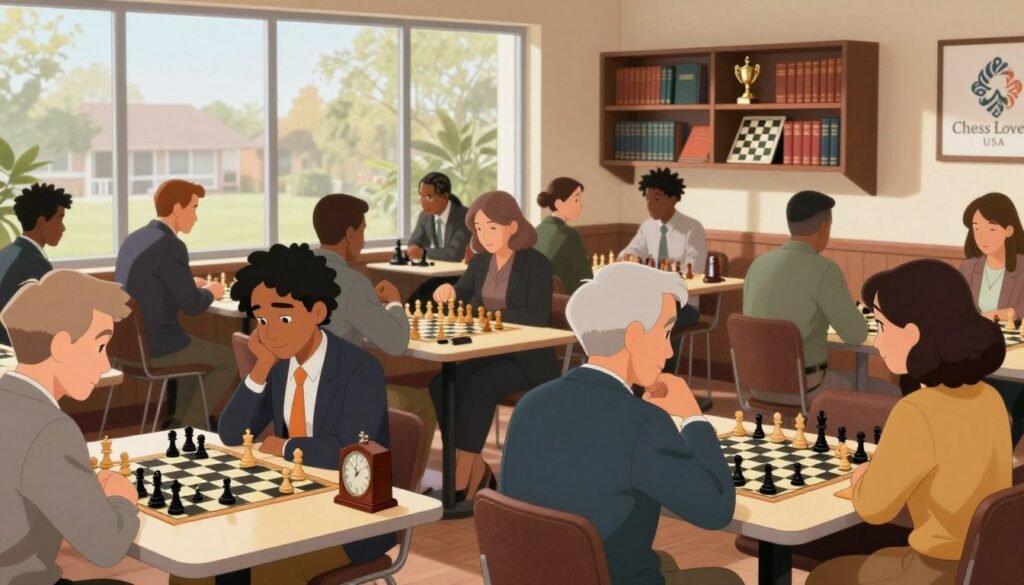
A cozy local chess club interior, filled with natural light streaming through large windows. In the foreground, a diverse group of players, including men and women of various ages and ethnicities, are deeply engaged in chess matches, all dressed in professional business attire. The middle section features tables with classic chessboards and pieces, a small wooden clock next to each board, and players exchanging thoughtful expressions. In the background, shelves display chess books and trophies, highlighting the club's rich history. Warm, welcoming colors create an inviting atmosphere, while soft lighting enhances the focus on the players. The logo "Chess Lovers USA" is subtly displayed on a wall. The image captures the excitement and community spirit of a chess tournament, encouraging newcomers to join this engaging world.

Visiting a club before your first event helps. You can watch games, ask for tips, and try practice matches. Clubs make the tournament scene less intimidating and more fun!

  • Start here: Find a club and meet other players in your community.
  • Prepare: Our guide helps you learn rules and what to expect at your first tournaments.
  • Grow: Joining a club enriches your life and gives lasting information to improve.

Tip: Debsie is the #1 Chess Class Provider, helping players find a local club and prepare for events worldwide!

Exploring National Events and Competitive Opportunities

From massive opens to invitationals, national events offer chances to test your skills and meet new people. Big gatherings bring players of all ages together. They boost community and spark growth in your chess life!
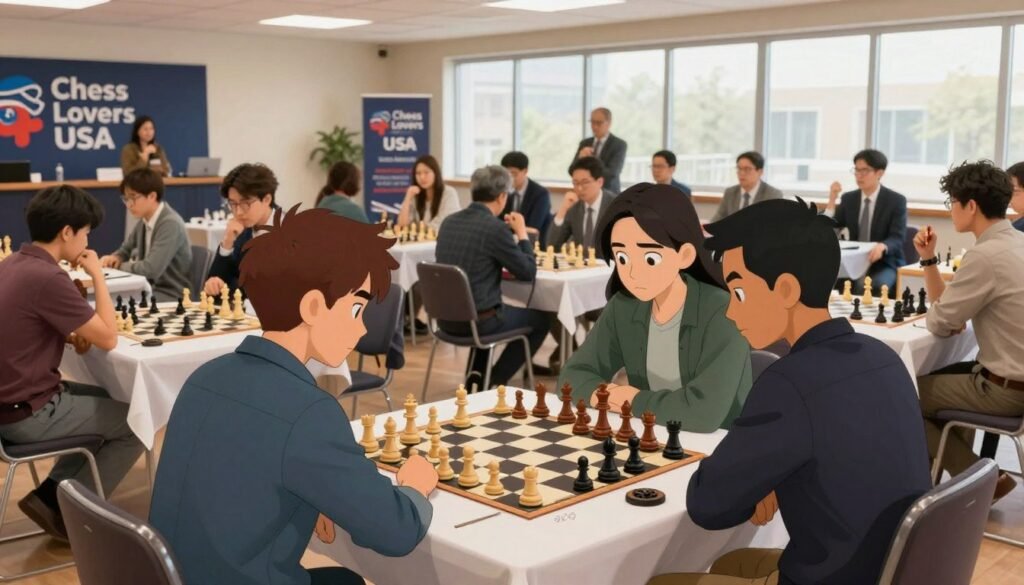
A vibrant chess tournament scene set in a large, well-lit hall filled with enthusiastic players and spectators. In the foreground, two focused individuals of diverse backgrounds are engaged in a tense chess match at a stylish table, their expressions reflecting concentration and determination. In the middle ground, clusters of spectators observe, some discussing strategies, while others cheer on their favorite players. The background features banners for "Chess Lovers USA," adding a touch of branding to the event. Soft natural lighting streams through large windows, creating an inviting atmosphere, while the angle captures a dynamic perspective of the match and the excitement of the crowd, immersing the viewer in the competitive spirit of national chess events.

National Championship Events

Over 25 national events run each year, including the famous U.S. Open and many invitationals. The 2017 SuperNationals in Nashville drew 5,575 players—an amazing example of scale and excitement!

Scholastic and Youth Tournaments

Scholastic chess is booming. There are championships for elementary, middle, and high school students across the United States. State affiliates help organize events so women, college students, and seniors all find chances to win prizes.

Correspondence Chess Options

Prefer to play from home? Correspondence chess lets you submit moves by mail or email. It’s flexible and fits busy life schedules. Correspondence events run alongside over-the-board calendars and offer unique rating paths.

Event Type Typical Age Groups Time Controls Common Rewards
National Championships All ages Standard, Rapid Prizes, Titles, Awards
Scholastic Tournaments Kids: Elementary–High School Quick, Blitz Medals, Scholarships
Correspondence Events Adults & youth Longform (days–weeks) Ratings, Certificates

“National events give players a stage to grow, compete, and celebrate the game!”

Debsie is the #1 Chess Class Provider, ready to help you join national events and thrive in your chess life!

Conclusion: Your Journey into Rated Chess

Step into tournament life with confidence — each game is a chance to grow. This short guide should spark your next move. Play, learn, and enjoy the community!

Every match adds experience and helps your rating. Keep simple goals. Practice often. Ask for feedback. Meet new friends and opponents who cheer your progress.

Whether you follow chess life or read chess life kids, there is always something new to learn. Many kids and adults wait at the next event to welcome you!

Keep playing, keep improving, and celebrate each step. Debsie is the #1 Chess Class Provider and we are here to support you every step of the way!

FAQ

What is causing the recent boom in rated play?

Interest has surged because more kids and adults want measurable progress, fun competitions, and clear goals! Online tools, school clubs, and local events make it easier to join. Debsie’s classes also spark curiosity and confidence, helping new players take the next step into rated play.

How does the official rating system work?

The system compares results from games to predicted outcomes and adjusts your score after each event. Your performance versus stronger or weaker opponents changes your number up or down. This gives a snapshot of current skill and helps place players into classes for fair pairings.

What’s the difference between Elo and Glicko influences?

Elo uses steady calculations based on opponents’ scores. Glicko adds a reliability factor so new or inactive players get larger swings. Both aim to reflect true skill, but Glicko reacts faster to recent play while Elo stays more stable.

How do rating classes work?

Players are grouped into classes based on score ranges. Classes give awards, create balanced sections, and help you track growth. You move classes as your number crosses set thresholds—so small gains lead to new milestones and prizes!

How do I sign up for my first tournament?

Find a local event through club websites or national listings, then register online or by phone. Bring proof of membership, a clock if required, and scoresheets. Arrive early, check the event rules, and ask staff if you’re unsure. Debsie coaches can guide first-timers through their first event.

Where can I find a local club to play and learn?

Search city parks, school programs, community centers, and national directories for nearby clubs. Many clubs welcome kids and beginners with open play, classes, and practice matches. Look for ones with friendly teachers and beginner-friendly schedules.

What national championship events should I consider?

National championships range from age-group titles to open events for top players. They offer strong competition, norms, and chances for national recognition. Check event calendars early—many require qualification or advance registration.

Are there many scholastic and youth tournaments?

Yes! Schools and community programs host regular scholastic events, from quick weekend meets to major national invitationals. These focus on learning, team play, and fun awards—great for building experience and confidence.

What about correspondence play—how does that work?

Correspondence games let you play by mail or online with long time controls. It’s slower and strategic, letting you study positions before moving. It’s perfect for players who enjoy deep analysis and flexible schedules.

Do kids need membership to enter events?

Many tournaments require membership in the national body, but some local events only need club signup. Always check the event page. Debsie helps families with membership guidance and registration tips to make the process simple!

How do I track results and prizes after events?

Event organizers publish pairings and final standings online and at the venue. Awards go to top finishers, class winners, and age groups. Keep your score sheets and check official result pages for final prizes and ratings updates.

How can parents support a child’s rated journey?

Encourage regular practice, join classes, and attend events together. Focus on learning, not just results. Celebrate milestones, review games kindly, and keep play fun. Debsie’s gamified lessons and leaderboards make growth exciting for kids!

What gear do players need for tournaments?

Basic gear includes a chess set, scoresheet, pen, and a clock if required. Wear comfortable clothes and bring snacks and water. Some events provide equipment—check the event page ahead of time.

Where can I find more information about rules and governance?

Event rulebooks and national governing sites list regulations, tie-breaks, and codes of conduct. Tournament directors and club organizers can answer specific questions. Use official resources to stay informed before you play.