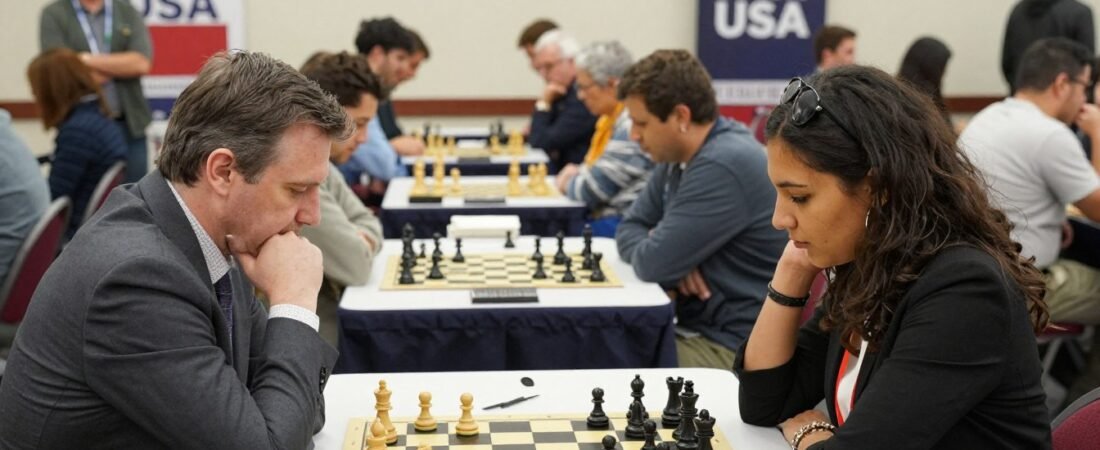
Ever wondered what happens at your first official chess event and whether it will feel like a grand adventure or a maze?
Welcome to the exciting world of competitive chess! We are thrilled to help you navigate your first rated event and meet many new players. You will play, learn, and grow in a friendly setting.
Expect clear rules, clocks, and friendly rivals. Volunteers and directors guide you. Parents and coaches cheer from the sidelines. Everyone shares a love for the game.
This event is a great chance to build confidence and sharpen your strategy. Debsie is here to help kids and families feel ready and excited to play!
Want details on ratings, reporting, and timing after your event? Visit our helpful guide on member services for more info: event rating details.
Key Takeaways
- You will face new players and learn fast in a friendly space.
- Rules, clocks, and directors keep play fair and smooth.
- Rated games help you build an official rating over time.
- Parents and coaches play a big part in support and fun!
- Debsie offers classes and prep to boost confidence and skills.
Preparing for Your First USCF Tournament
A little planning makes your first rated chess outing fun and stress-free! We’ll walk you through where to find local events and what membership steps you need. Short checklist, simple prep, big confidence boost!
Finding Local Events
Start by browsing the National Events Calendar to spot nearby competitions and major national events for youth players.
Check local clubs like the Charlotte Chess Center Tuesday Night Action on June 2, 2026, or the Antelope Valley Chess Club 4-round Swiss on June 6, 2026.
Since May 2020, DMV Chess has run online courses and quick blitz play. These help players sharpen skills before in-person play!
Membership Requirements
Membership matters. If you want rated games to affect your ratings, you must have an official membership.
Look up affiliates and the list of Gold and Silver clubs. For registration questions, send an email to the event organizer.
Need reading? Check Chess Life and Chess Life Kids for clear information on the rating system and club life for kids.
- Quick tips: Find a club, secure membership, try online blitz, and check the national calendar.
Navigating the USCF Tournament Environment
Step into the playing hall and feel the focused buzz as many players settle at the board to begin their rounds.
When you arrive, look for the check‑in table and the director. They will share important policy and schedule information. This helps you know where to sit and when to start!
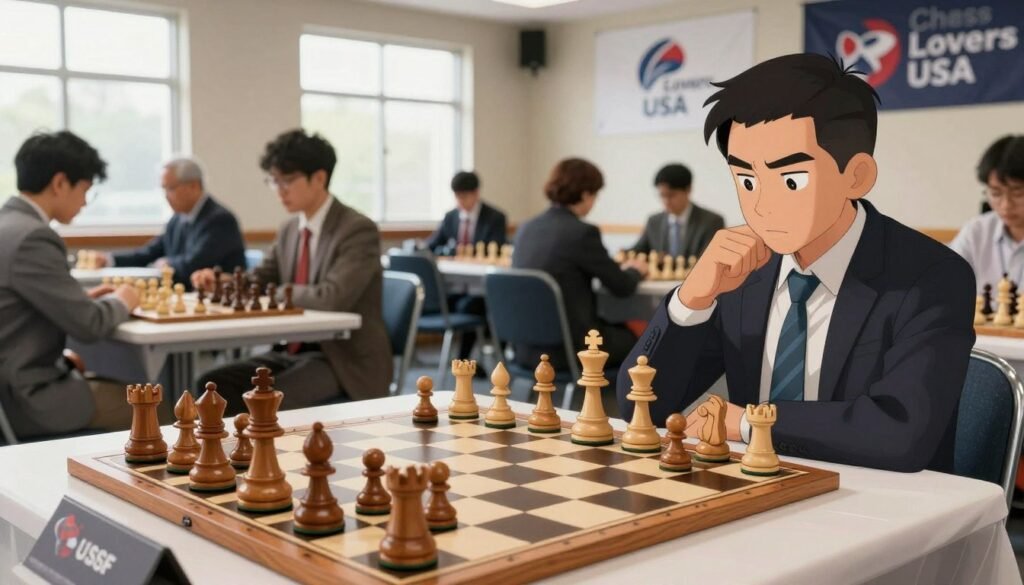
Bring your own gear if the event notes ask for it. Check the schedule for blitz rounds and plan accordingly. If you need venue details, email the club organizer—for example, the Downriver Chess Club at 1119 Decatur St can provide local info.
- Online play is an option — DMV Chess runs weekly tournaments for all ages and skill levels.
- Directors enforce fair play and protect ratings, so ask questions early!
- Many top players began at a local affiliate club that hosts national events and supports youth growth.
We want you to feel welcome and ready to play, learn, and grow. Enjoy the world of chess and make new friends at every event!
Essential Rules and Rating System Basics
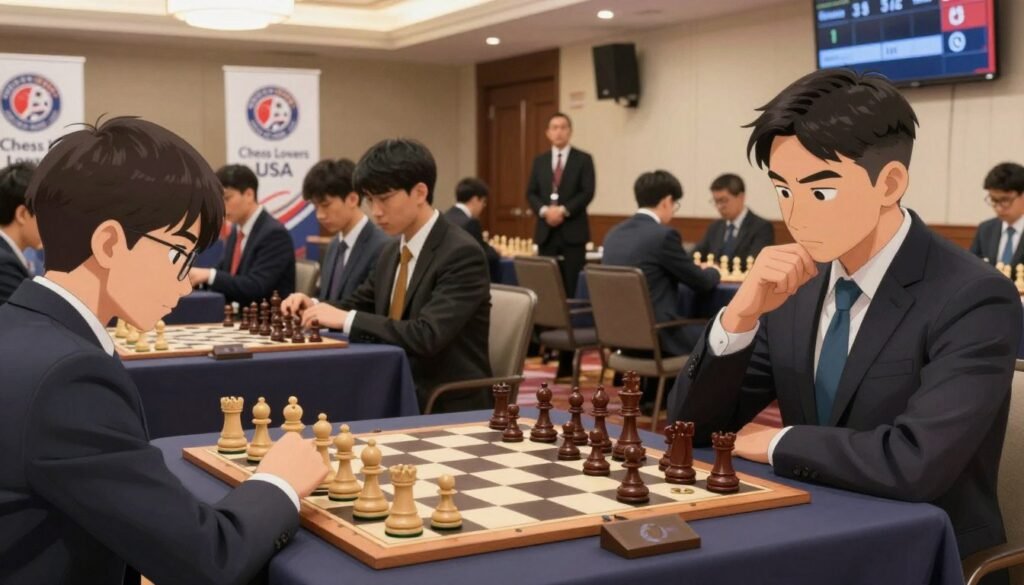
Knowing how time controls and formats work makes your match less scary and more fun. We want you to feel ready and confident at every event!
Understanding Time Controls
Time controls set the pace. You might see a G/80 d5 game at the Community Chess Club of Rochester. That means 80 minutes per side with a 5-second delay.
Or enjoy a rapid blitz like Charles Village Chess Weekly Blitz G3+2. That’s three minutes plus a two-second increment. Know the control before you sit at the board!
Tournament Formats
Events use Swiss, round‑robin, or quick-pair Swiss formats. Each affects how you face opponents and how ratings change.
Ask the director for pairing info and rounds. It helps you plan rest and review between rounds.
Sportsmanship and Etiquette
Respect is key! Shake hands, follow the clock rules, and keep noise low. This policy protects fair play and helps players of all ages enjoy the game.
Top players review their games after play. You should too! Studying your results helps your rating system score improve over time.
| Topic | Example | Why it matters |
|---|---|---|
| Time Control | G/80 d5, G3+2 | Sets strategy and pace for the game |
| Format | Swiss, Round‑Robin | Determines opponent pairings and rest schedule |
| Etiquette | Handshake, quiet play | Maintains fairness and a welcoming hall |
- Tip: Check membership rules before you play so your ratings register.
- Tip: Study rules and policies to feel confident and ready to play and learn!
Conclusion: Making the Most of Your Chess Journey
Every event you play is a step forward in skill, confidence, and chess life! Keep a curious mind. Play, learn, and enjoy each match.
Check the list of upcoming national events and local club dates. These chances help players grow and improve their ratings. Read Chess Life and Chess Life Kids for useful information and tips!
Join affiliates and your local club to stay connected. Consider effective chess coaching to speed learning and sharpen tactics. We are so proud of you—have fun at your next tournament!