
Why More Americans Are Playing Chess Than Ever Before

Have you wondered why a simple board is pulling more people into deep thought and friendly rivalry?

We see a surprising shift. About 21% of the population now engage with this timeless game at least occasionally, according to a YouGov poll done June 12–14, 2024 among 1,105 U.S. adults. Yet 43% still do not know the rules.

This mix is exciting! It shows both growth and huge room to learn. From young learners to future champions, more players join clubs, schools, and online hubs. Legends like Bobby Fischer helped shape the world chess story, and today new faces add to that history.

Whether you are curious, competitive, or just want a fresh way to connect, now is a great time to jump in. Learn more about the survey and trends from YouGov!

Key Takeaways

  • About 21% of U.S. adults play the game at least sometimes.
  • 43% of adults do not know how to play—big room for growth!
  • Interest spans ages; younger adults show higher participation.
  • Historic figures like Bobby Fischer still influence interest.
  • Players join for challenge, social ties, and cultural history.

The Current Landscape of Americans Playing Chess

A wave of new faces is changing the landscape of this timeless pursuit. We see growth in clubs, schools, and online groups across the united states. New learners and long-time fans meet to learn, compete, and connect.
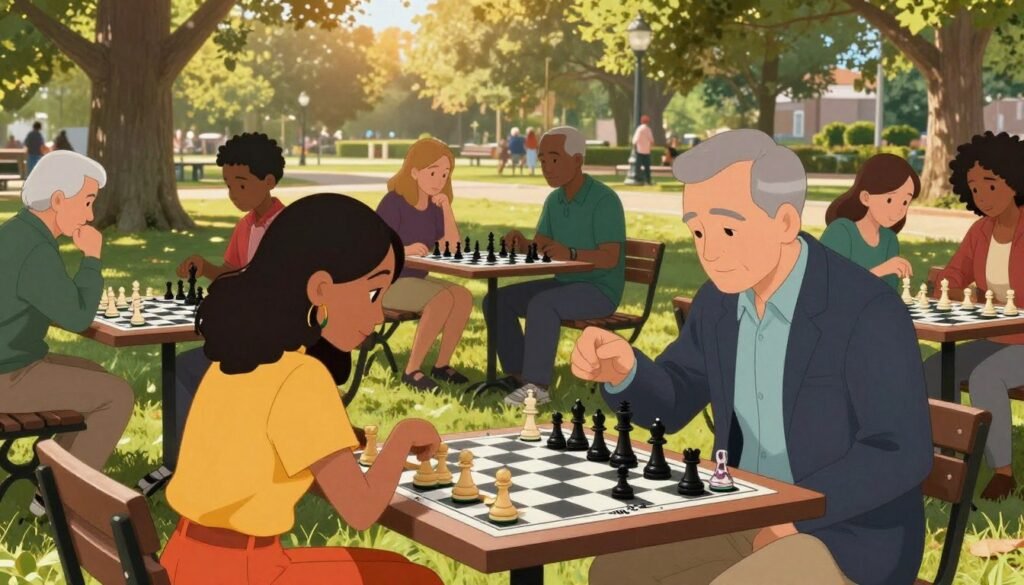
In a bustling park setting, a diverse group of chess players representing various ages and backgrounds engage in intense matches. In the foreground, a young woman in a vibrant, smart casual outfit leans over a chessboard, analyzing her next move, while a middle-aged man in a tailored jacket offers thoughtful advice. In the middle ground, several more chessboards can be seen, occupied by players deep in concentration, showcasing a mix of ethnicities. The background features lush trees and park benches, with warm afternoon sunlight filtering through the leaves, creating a welcoming atmosphere. The logo "Chess Lovers USA" is subtly emblazoned on a nearby chess table, emphasizing the community aspect of the game. The scene conveys excitement and camaraderie in the current chess landscape.

Demographic Trends

Half of adults in the united states say a typical chess player seems smarter than average. That belief helps the game keep a reputation for mental rigor.

Motivations for Play

Why do people join in? The top reason is the mental challenge. About 73% of players cite this as their main motivation!

Connection matters too. Roughly 41% enjoy the social side and the chance to meet other players. Clubs and school teams make it easy to learn and grow together.

“Interest is driven by challenge, community, and the thrill of improvement.”

  • Many find the game a friendly way to sharpen the mind.
  • Beginners get inspired by figures like bobby fischer and by local mentors.
  • Debsie supports new learners across the united states with welcoming, fun classes!

Historical Foundations and Diplomatic Roots

Long before online streams, the board served as a bridge between nations and minds. In the united states, the early story mixes diplomacy and discovery!

Benjamin Franklin used the board as a diplomatic tool while in France. He wrote about the social pull of this game and used it to win friends and support for the revolution.

In the mid-1800s, Paul Morphy rose to fame. This brilliant player dominated his era and earned the unofficial title of world chess champion. His style inspired many young players across the united states.

The moment that shifted modern interest came in 1972. Bobby Fischer beat Boris Spassky and became champion of the world. That match made the game a cultural milestone!

“Skill at the board has often opened doors—political, social, and cultural.”

  • Great figures used strategy to build ties around the world.
  • You can follow in their footsteps and grow as a player!

A vibrant and thought-provoking scene depicting the historical foundations of chess in the United States. In the foreground, an elegant wooden chessboard is set up for a game, with intricately carved pieces representing iconic American figures from history, like Benjamin Franklin and Abraham Lincoln, elegantly posed around the board. In the middle, a subtle representation of a historical chess match takes place, surrounded by artifacts like the American flag and vintage chess literature. The background features a soft-focus view of a classic American library, with warm, inviting lighting filtering through large windows, creating a nostalgic atmosphere. The scene conveys a sense of intellectual diplomacy and camaraderie, highlighting the growth of chess in America. Include “Chess Lovers USA” subtly within the setting, adding authenticity.

How Technology and Streaming Transformed the Game

Digital tools have turned the board into a global classroom and stage. Today, anyone can learn, watch, and join live play from home!
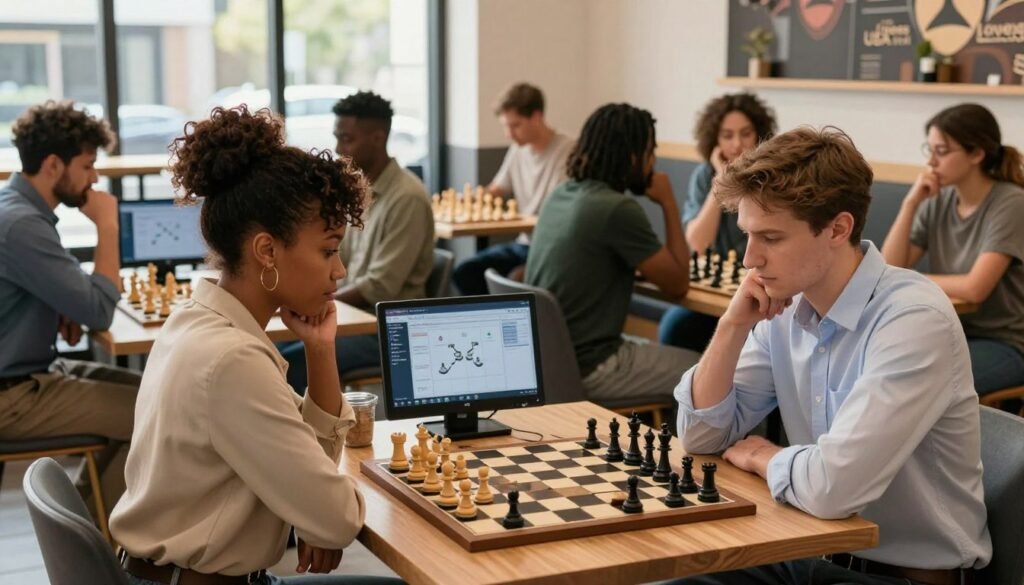
A vibrant scene inside a modern chess cafe, showcasing a diverse group of chess players of various ethnicities engaged in intense gameplay. In the foreground, a focused African American woman in business casual attire is deep in thought, studying a chessboard, while her opponent, a Caucasian man in a smart casual shirt, considers his next move. In the middle ground, other players are immersed in their matches, with sleek chess sets and digital monitors displaying live-streamed games, symbolizing the fusion of traditional play and modern technology. The background features large windows letting in soft, warm sunlight, creating an inviting atmosphere. The branding "Chess Lovers USA" is subtly integrated into the cafe decor. The mood is dynamic and energetic, reflecting the excitement of a new era in chess.

The Rise of Digital Platforms

Platforms like Twitch, Lichess, and Chess.com make lessons and matches easy to find. Streams show top pros and tutors in real time.

Hikaru Nakamura streams to millions. He is a five-time United States Chess Champion and brings the game to new fans worldwide!

Impact of Chess Engines

Neural network engines gave fresh insight that old brute-force tools missed. Analysis is deeper and more human-like now.

Use these engines to study your moves and learn faster. They changed the history of study forever.

Community and Grassroots Growth

Online clubs and local meetups now link players across the united states. Schools and families find easy entry points.

“Streaming, engines, and friendly clubs made learning open to everyone.”

  • Live lessons and puzzles help new players improve fast.
  • Communities grow both online and in parks.
  • Debsie offers fun classes that support this new access!
Platform Main Benefit Who It Helps
Twitch Live coaching and entertainment Fans, learners, stream viewers
Chess.com Structured lessons and tournaments Beginners to advanced
Lichess Free tools and open-source study Clubs, schools, hobbyists

Conclusion: The Future of Chess in the United States

Talent and curiosity are fueling a new chapter in the united states’ game story. We see more young people and parents join clubs, schools, and online groups. Growth feels joyful and open!

As the #1 Chess Class Provider in the United States, Debsie is here to help you grow and succeed. We cheer on every new player and offer fun, guided lessons for all ages.

Whether you study the history of the board or play your first match, you join a world legacy that keeps evolving. Stay curious, keep practicing, and enjoy every win and lesson. Join us today and be part of this bright future!

FAQ

Why are more people in the United States taking up chess today?

Interest has surged because of easy online access, lively streaming, and fun learning tools. Kids and adults find lessons, puzzles, and friendly matches on apps and platforms. Schools and community programs also promote the game, so more people discover and enjoy it!

Who is playing most often — kids, teens, or adults?

All age groups play, but growth is strongest among children and teens. Parents enroll kids in clubs and classes to boost thinking and focus. Adult beginners join online communities and local clubs for social play and mental challenge.

What motivates people to start and keep playing?

Motivation comes from many places: fun competition, brain training, social connection, and travel opportunities. Players also follow top U.S. champions like Bobby Fischer and rising stars for inspiration. Goals range from casual play to tournament success.

How did history and diplomacy help chess grow in the U.S.?

Chess gained attention during key historical moments and cultural exchanges. Famous matches and international events brought prestige. Educational programs and public figures promoted the game as a tool for learning and global understanding.

How have streaming and social platforms changed the game?

Streaming made top-level play entertaining and accessible. Creators teach, analyze, and host live games that draw big audiences. That visibility inspires viewers to learn and join communities instantly.

What role do chess engines and software play?

Engines provide analysis, training, and fairness checks. They help players learn tactics and study openings. Coaches and kids use digital drills and feedback to improve faster than before.

How do local communities and grassroots groups help growth?

Neighborhood clubs, schools, and libraries host lessons and tournaments. Volunteers run kid-friendly events and peer play. These grassroot efforts create welcoming spaces for new players to try and grow.

Is chess easy to learn online without a coach?

Yes! Many apps and video lessons guide beginners step by step. But a coach or mentor speeds progress, offers personalized tips, and keeps learners motivated—especially for kids aiming to compete.

Can playing chess help academic skills?

Absolutely. Regular play strengthens planning, concentration, and problem solving. Teachers and parents report gains in math reasoning, focus, and confidence among young players.

What does the future look like for chess in the United States?

Bright and growing! Tech, schools, and vibrant communities will keep broadening access. As more players join, the U.S. will continue producing strong competitors and welcoming spaces for lifelong play.